
If you manage a commercial property or oversee building safety, you may have asked: what is an evacuation diagram and why is it required?
Simply put, an evacuation diagram is a visual safety map displayed inside buildings that shows occupants how to exit safely during an emergency. These diagrams are a key part of emergency planning and are required in many Australian workplaces under AS 3745 – Planning for Emergencies in Facilities.
However, evacuation diagrams do more than just show exits. They provide clear instructions that help people respond quickly and safely if a fire or emergency occurs.
In this guide, we explain exactly what an evacuation diagram is, what it must include, and why property managers and building owners need them.
What Is an Evacuation Diagram?
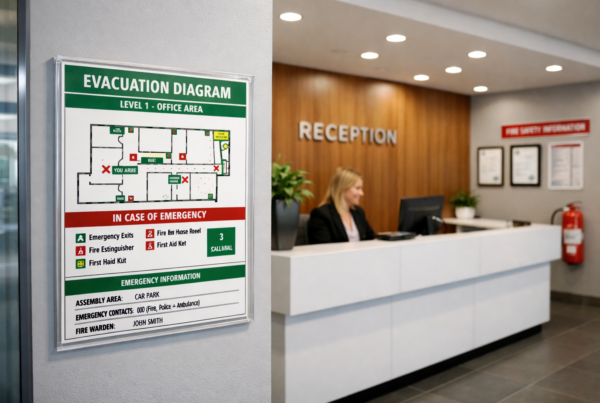
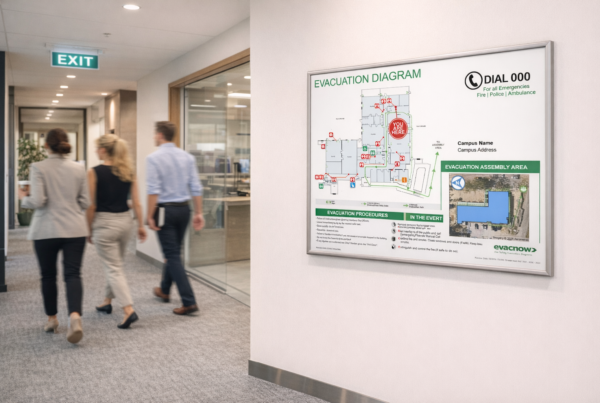
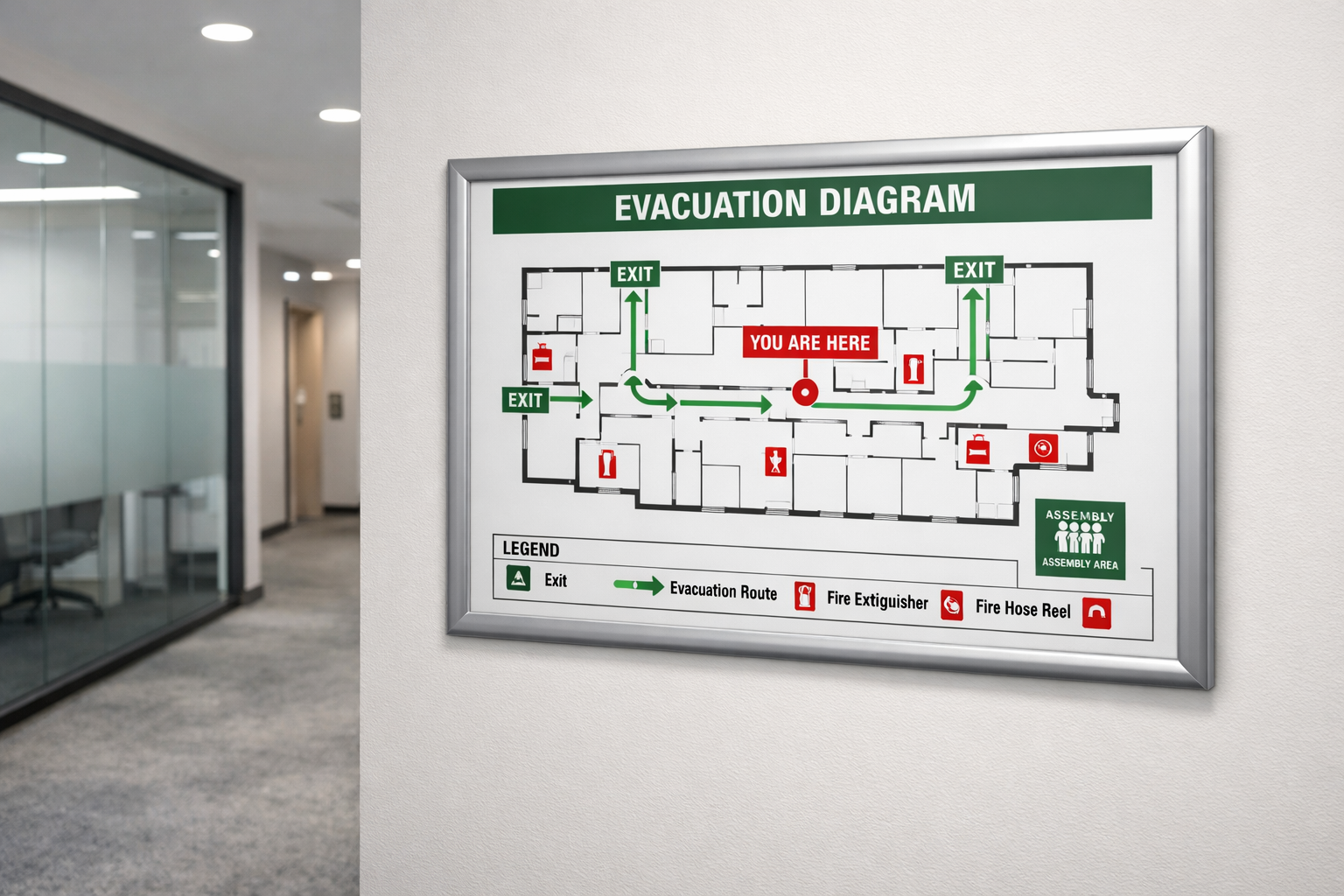
An evacuation diagram is a wall-mounted safety diagram that shows the layout of a building and the safest way to exit during an emergency. Typically installed in visible areas such as corridors, lift lobbies, and near exits, evacuation diagrams help occupants quickly understand:
- Where they are in the building
- The nearest emergency exits
- Evacuation routes to follow
- Locations of fire safety equipment
- Where the emergency assembly area is located
Because emergencies can happen suddenly, evacuation diagrams provide immediate visual guidance when people may not be familiar with the building.
Why Evacuation Diagrams Are Important
Firstly, evacuation diagrams support safe and orderly evacuation during emergencies. When occupants can clearly see where to go, evacuation becomes faster and more organised. Secondly, evacuation diagrams are part of broader emergency planning requirements. In Australia, many buildings must maintain evacuation diagrams as part of their emergency procedures under AS 3745. Finally, evacuation diagrams help organisations demonstrate due diligence during safety inspections and audits. If diagrams are missing or inaccurate, this may raise compliance concerns.
What Must an Evacuation Diagram Include?
To meet Australian Standard AS 3745, evacuation diagrams must contain several important elements.
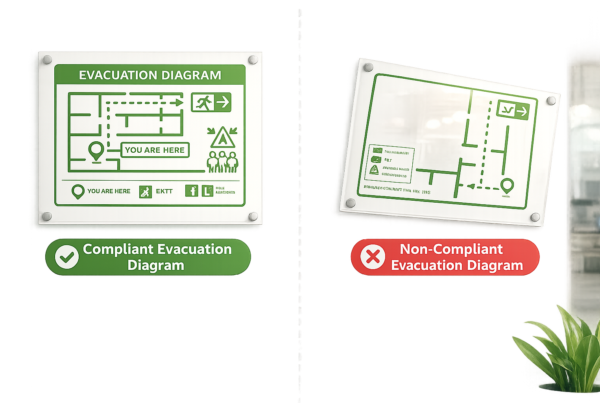
A compliant evacuation diagram typically includes:
- A “You Are Here” marker showing the viewer’s location
- Clearly marked evacuation routes and exits
- Locations of fire safety equipment such as extinguishers or hose reels
- The designated emergency assembly area
- A north point showing building orientation
- A diagram issue date and review period
In addition, diagrams must use recognised symbols and remain easy to read from a reasonable viewing distance.
If these elements are missing, the evacuation diagram may not meet compliance requirements.
Where Should Evacuation Diagrams Be Installed?
Evacuation diagrams should be installed in locations where occupants can easily see them.
Common installation points include:
- Near building exits
- Inside lift lobbies
- Along main corridors
- In common areas
- Within large office tenancies
Because different areas of a building require different orientations, diagrams are typically prepared specifically for each installation location.
Who Is Responsible for Evacuation Diagrams?
Responsibility for evacuation diagrams generally sits with the Person Conducting a Business or Undertaking (PCBU).
Depending on the building, this could include:
- Building owners
- Property managers
- Facility managers
- Business owners or tenants
- Body corporates (for shared areas)
In many multi-tenant buildings, responsibilities may be shared between building management and individual tenants.
Therefore, it is important for property managers and building owners to confirm who is responsible for maintaining evacuation diagrams.
When Do Evacuation Diagrams Need to Be Updated?
Evacuation diagrams must remain accurate and up to date.
Under AS 3745, diagrams should be reviewed at least every five years. However, they must also be updated whenever building layouts or emergency equipment locations change.
For example, updates may be required after:
- Renovations or office fit-outs
- Changes to exits or evacuation routes
- Relocation of fire safety equipment
- Changes to emergency assembly areas
Keeping evacuation diagrams current helps ensure occupants receive correct guidance during emergencies.
A Simple Way to Stay Compliant
Today, many property managers and business owners choose to order evacuation diagrams online. This allows them to upload floor plans, review draft diagrams, and receive compliant files without needing a site visit.
As a result, evacuation diagrams can be prepared faster and updated more easily when layouts change.
If you’re unsure whether your current diagrams meet Australian standards, you can also request a quote or arrange a compliance review.
So, what is an evacuation diagram?
It’s a simple but critical safety tool that helps occupants exit buildings safely during emergencies. For property managers and building owners, evacuation diagrams are also an important part of maintaining compliance under Australian safety standards.
Clear, accurate evacuation diagrams improve safety, support emergency planning, and help ensure buildings meet their legal responsibilities.