
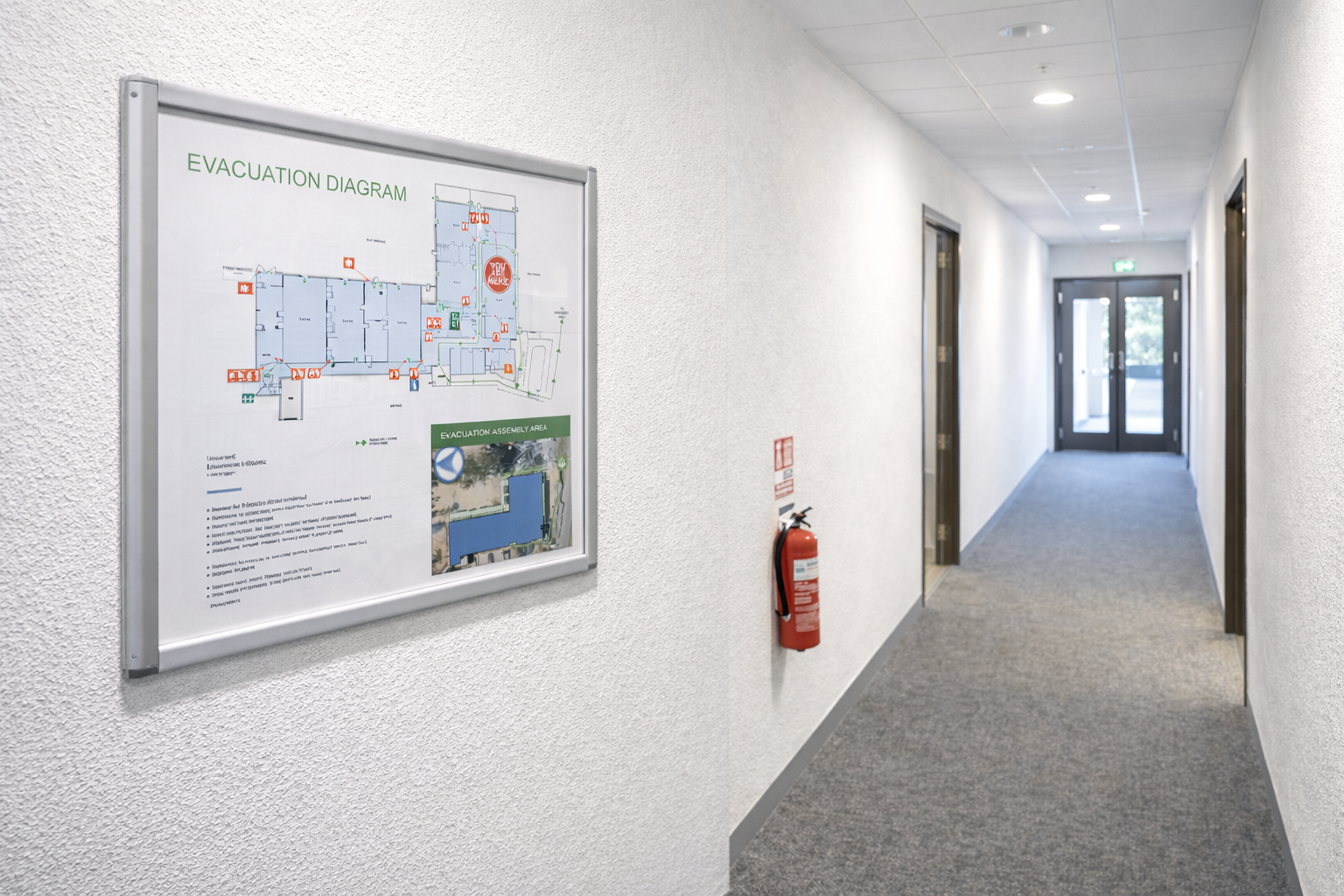
What Buildings Actually Need
If you’re responsible for a building or workplace in Queensland, evacuation diagrams aren’t something you want to get wrong.
They’re often checked during fire safety audits, inspections, and tenancy reviews — and if they’re missing or incorrect, it gets picked up quickly.
The issue is, most people aren’t clear on what’s actually required.
Are Evacuation Diagrams Required in QLD?
Yes, many Queensland buildings must display evacuation signs and diagrams under the Building Fire Safety Regulation 2008.
Section 30 sets out requirements for their location, visibility, orientation and secure attachment. However, that section does not apply where the building’s total floor area is less than 300 m².
This refers to the whole building, rather than simply the size of an individual shop or tenancy. A smaller premises may still have other applicable requirements, so floor area alone should not be used to decide whether diagrams are needed.
Not sure what applies to your property? Tell us about your building and we can help you work out the next step.
What Standard Applies?
Evacuation diagrams in Queensland are typically prepared in accordance with:
While it’s a standard rather than legislation, it is widely used as the benchmark during:
- Fire safety audits
- Compliance inspections
- Building management reviews
From a practical point of view, if your diagrams don’t align with AS 3745, there’s a strong chance they’ll be flagged.
Common Properties We Prepare Diagrams For
EvacNow prepares evacuation diagrams for:
- Offices and commercial tenancies
- Retail shops and shopping centres
- Warehouses and industrial premises
- Apartment buildings and strata common areas
- New and refurbished commercial fit-outs
The requirements depend on the building and its use. We can discuss your property and confirm what information we need to prepare your diagrams.
What We See on Site (Common Issues in QLD)
From a Fire Safety Advisor perspective, these are the most common problems:
- No evacuation diagrams installed at all
- Diagrams that don’t match the current layout
- Missing or unclear “You Are Here” markers
- Incorrect exit paths or outdated routes
- Fire equipment shown incorrectly
- Diagrams well past their review date
Most of these aren’t picked up until someone actually looks for them.
Need Evacuation Diagrams for a Brisbane Property?
EvacNow prepares evacuation diagrams for Brisbane workplaces, commercial properties and fit-outs, supplied as print-ready PDFs.
Need help on site? Site assessments, printing, framing and installation are also available and quoted separately.
View our Brisbane evacuation diagram service.
What Do Evacuation Diagrams Need to Show?
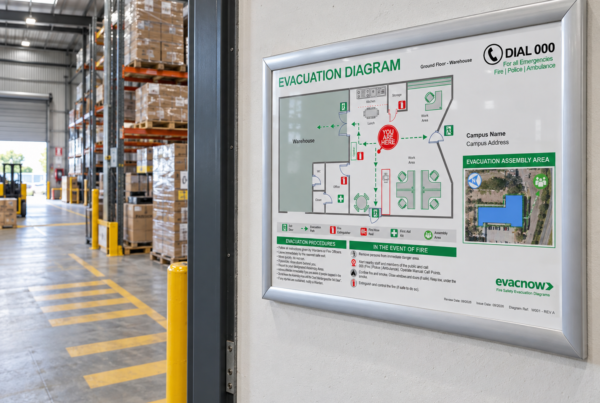
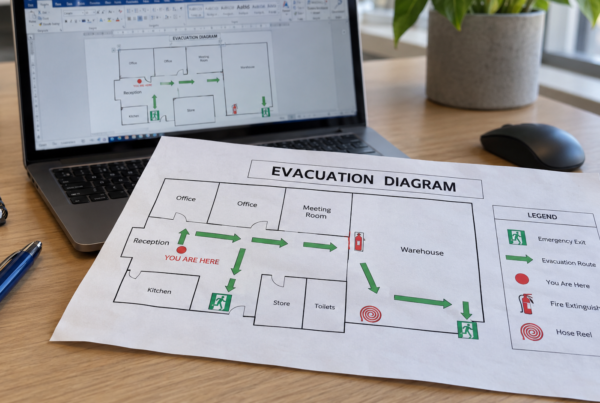
Under AS 3745, evacuation diagrams should clearly include:
- A “You Are Here” location
- Primary and alternative exit routes
- Emergency exits
- Fire equipment (extinguishers, hose reels, alarms)
- Assembly area
- Relevant emergency instructions
They also need to be:
- Easy to read
- Oriented correctly to the viewer
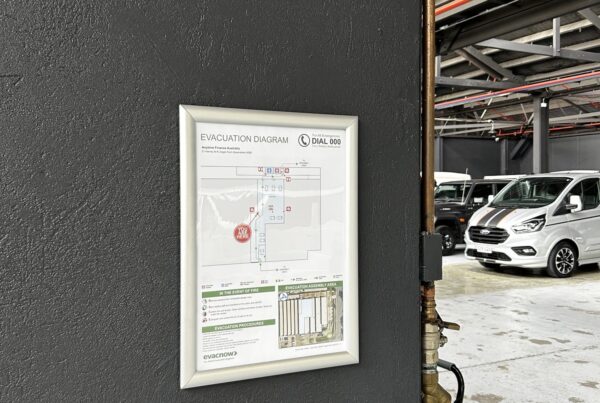
- Positioned where occupants will see them
How Often Should Evacuation Diagrams Be Updated?
As a general guide:
- Diagrams should be reviewed at least every 5 years
- Updated sooner if:
- Layouts change
- Tenancies are modified
- Fire equipment is relocated
- Procedures are updated
Outdated diagrams are one of the easiest things to pick up during an audit.
What Happens If You Don’t Have Compliant Diagrams?
In Queensland, evacuation diagram issues are usually identified during:
- Fire safety inspections
- Routine compliance audits
- Building certification processes
- Lease or tenancy changes
When issues are found, it typically leads to:
- Requests to update or install diagrams
- Delays in approvals or compliance sign-off
- Additional follow-up inspections
Most of this is avoidable with the right setup.
Quick Compliance Check (QLD)
Ask yourself:
- Are evacuation diagrams installed in key locations?
- Do they reflect the current building layout?
- Are exits and fire equipment accurately shown?
- Is there a clear “You Are Here” marker?
- Have they been reviewed in the last 5 years?
If there’s any uncertainty, it’s worth reviewing before it gets picked up later.
Need help with your evacuation diagrams?
Whether you need new diagrams or updates to existing ones, send us your property details and any floor plans you have. We’ll confirm what information is needed and provide a fixed quote.
No floor plans? Get in touch to discuss the options.